Bathroom Lighting and Mirror Guide: Getting the Layers Right
Good bathroom lighting works in layers.
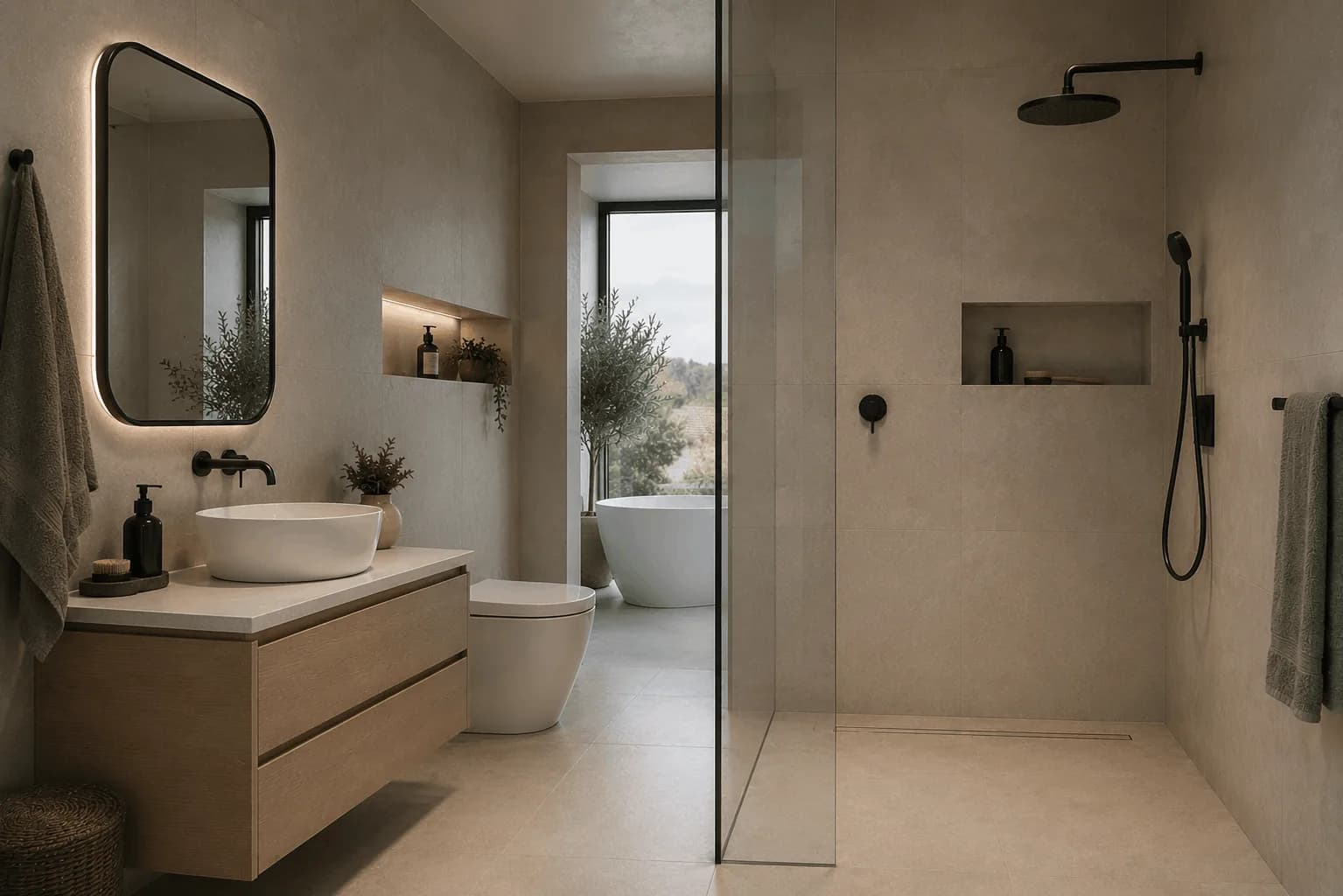
General ceiling light makes the room safe to move through, focused light supports grooming at the mirror, and softer ambient light gives the space warmth when full brightness is not needed.
Start with the mirror wall because this is where lighting quality is noticed most.
Light should reach the face evenly without creating heavy shadows beneath the eyes or chin. Side lighting or a well-designed illuminated mirror can provide more balanced task light than a single downlight overhead.
Choose the mirror in proportion to the vanity.
It can align closely with the vanity width, relate to the basin position or form a deliberate feature, but it should not feel disconnected from the tapware and cabinetry below. Confirm mounting height before electrical points are finalised.
Consider colour temperature across the whole room.
Warm white light generally complements timber, travertine and warmer metal finishes, while a neutral white can feel crisp beside pale stone and chrome. Mixing noticeably different colour temperatures in one sightline can make finishes appear inconsistent.
Plan controls around how the bathroom is actually used.
Separate switching for task and ambient lighting gives more flexibility early in the morning and at night. Dimming can help, provided the selected fittings and controls are compatible.
Bathroom electrical work must suit wet-area requirements.
Product ratings, installation zones, ventilation and wiring should be confirmed by a licensed electrician before purchase or installation. Decorative appearance should never replace the correct technical specification.
View illuminated products in person where possible.
Brightness, diffusion, reflection and finish are difficult to judge from a screen alone, particularly when the mirror will become a major light source in the room.