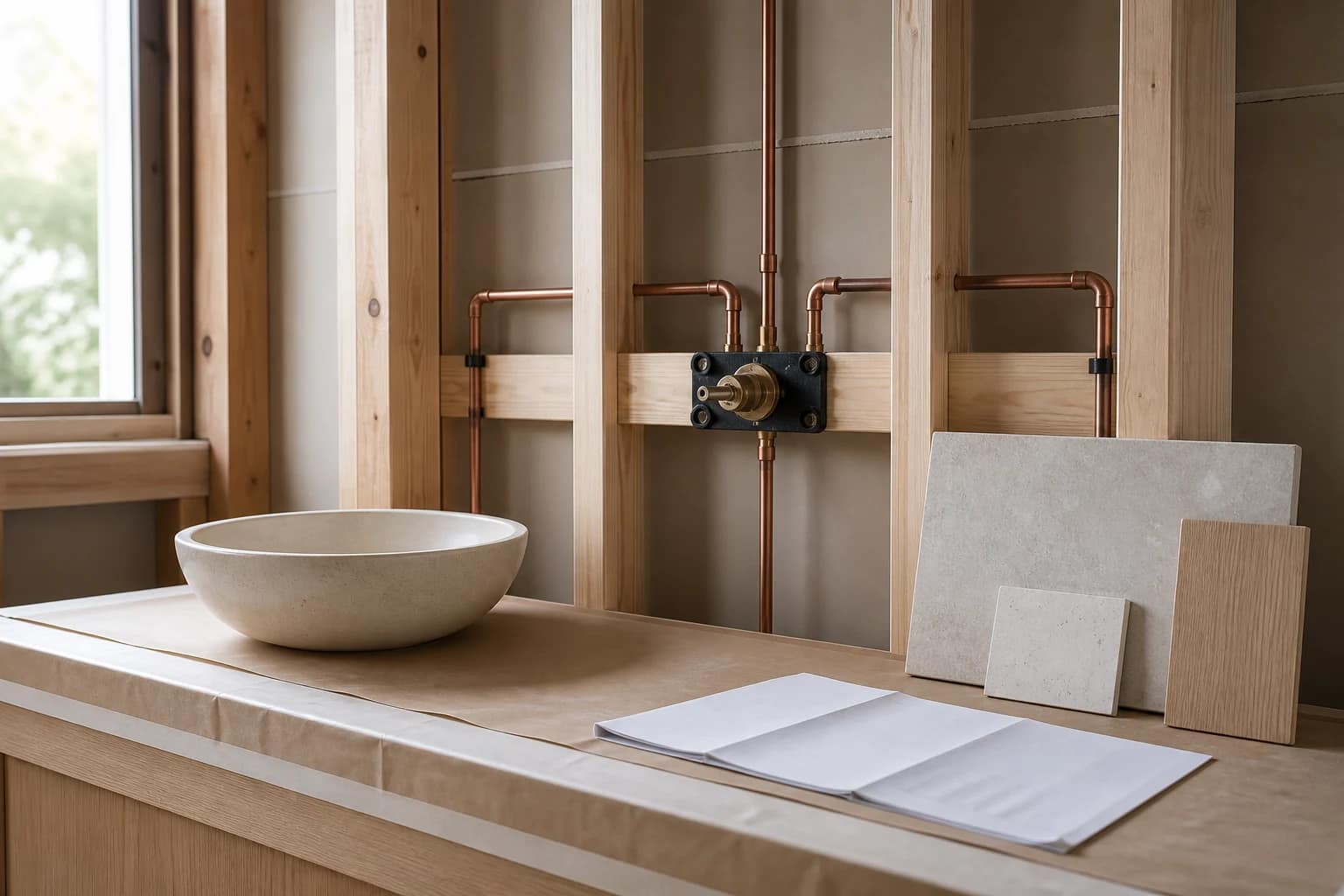
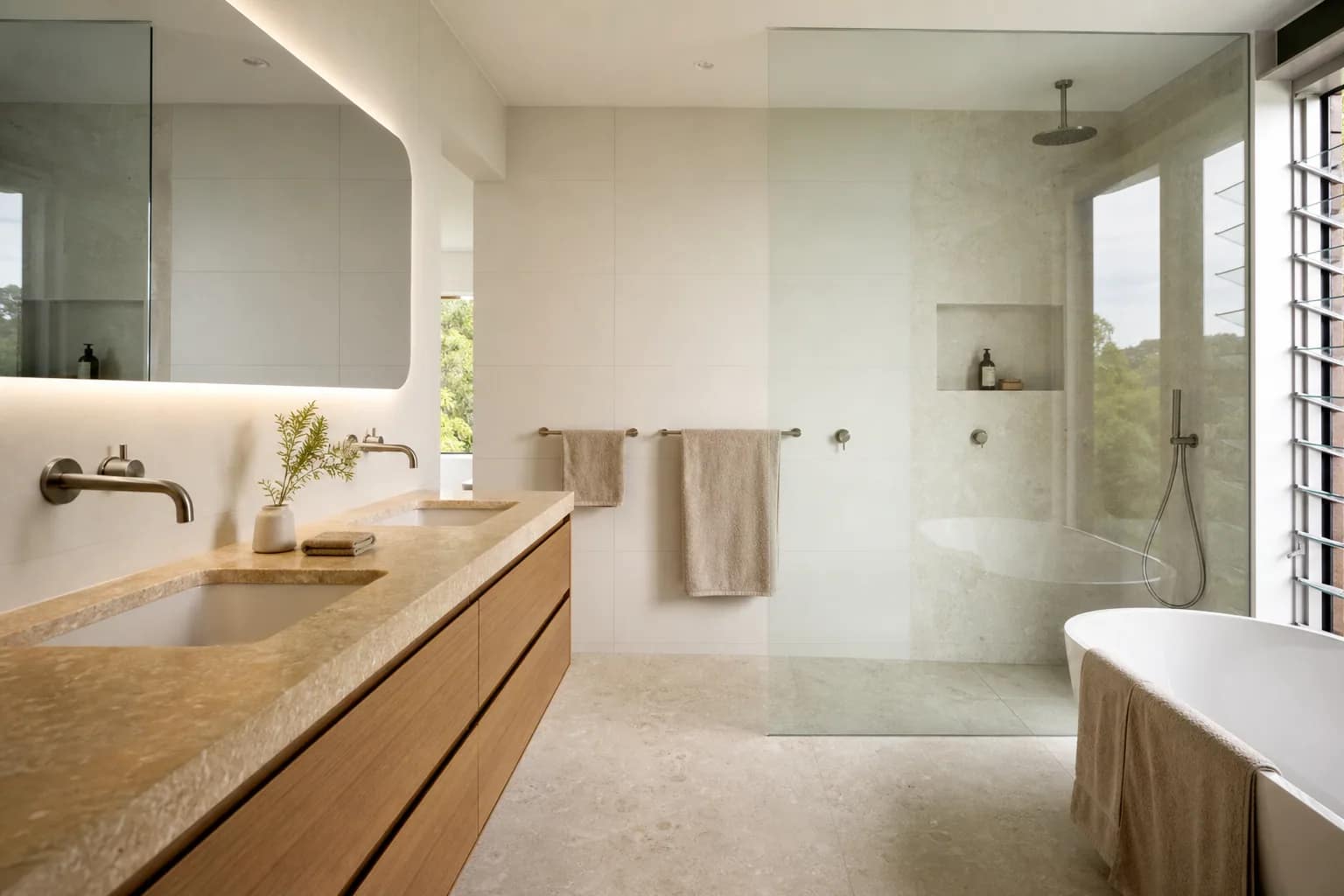
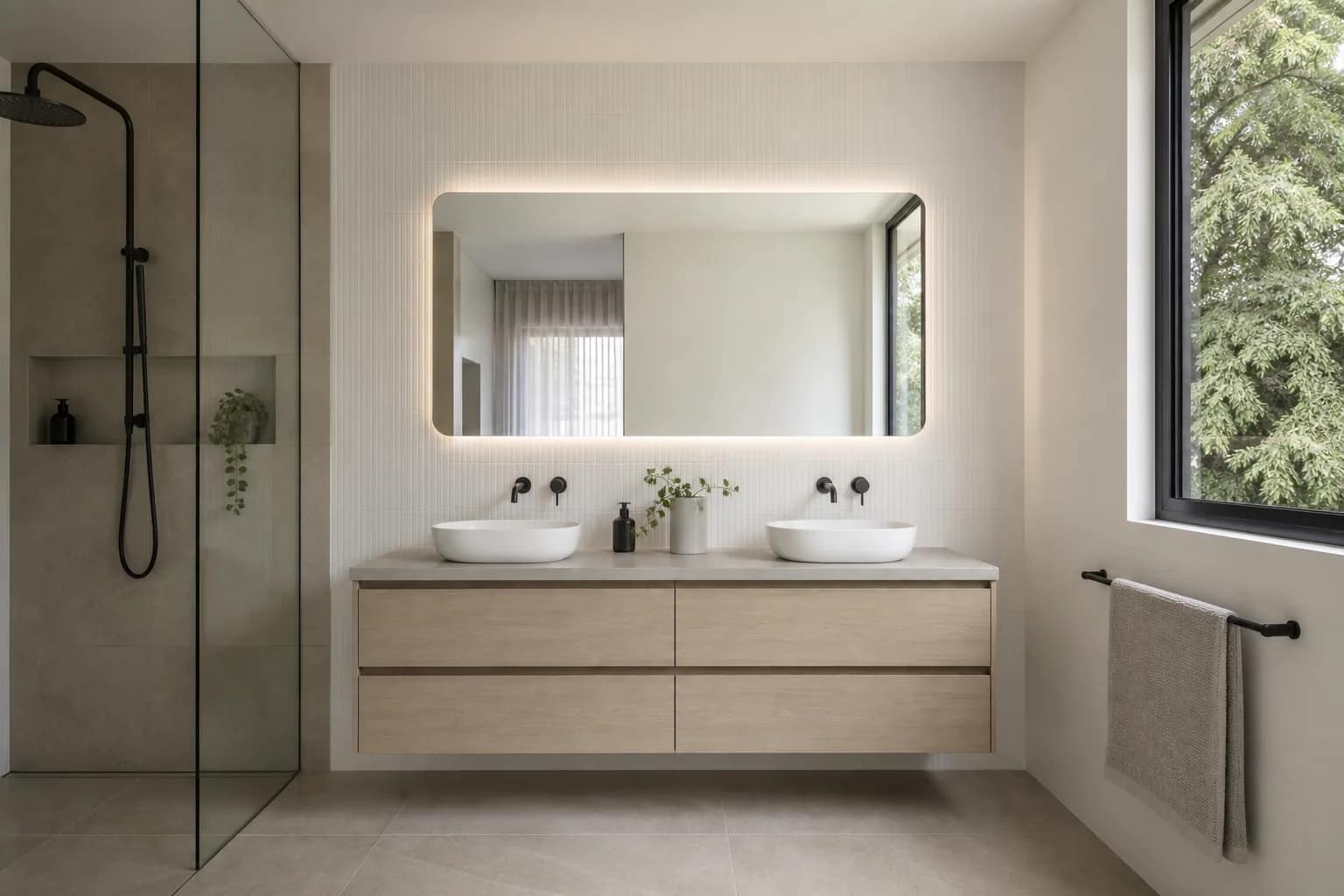
Wall-mounted tapware creates a clean, architectural basin or bath zone, but the visible spout and control are only the final layer. The important decisions happen earlier, while the wall framing and plumbing are still accessible.
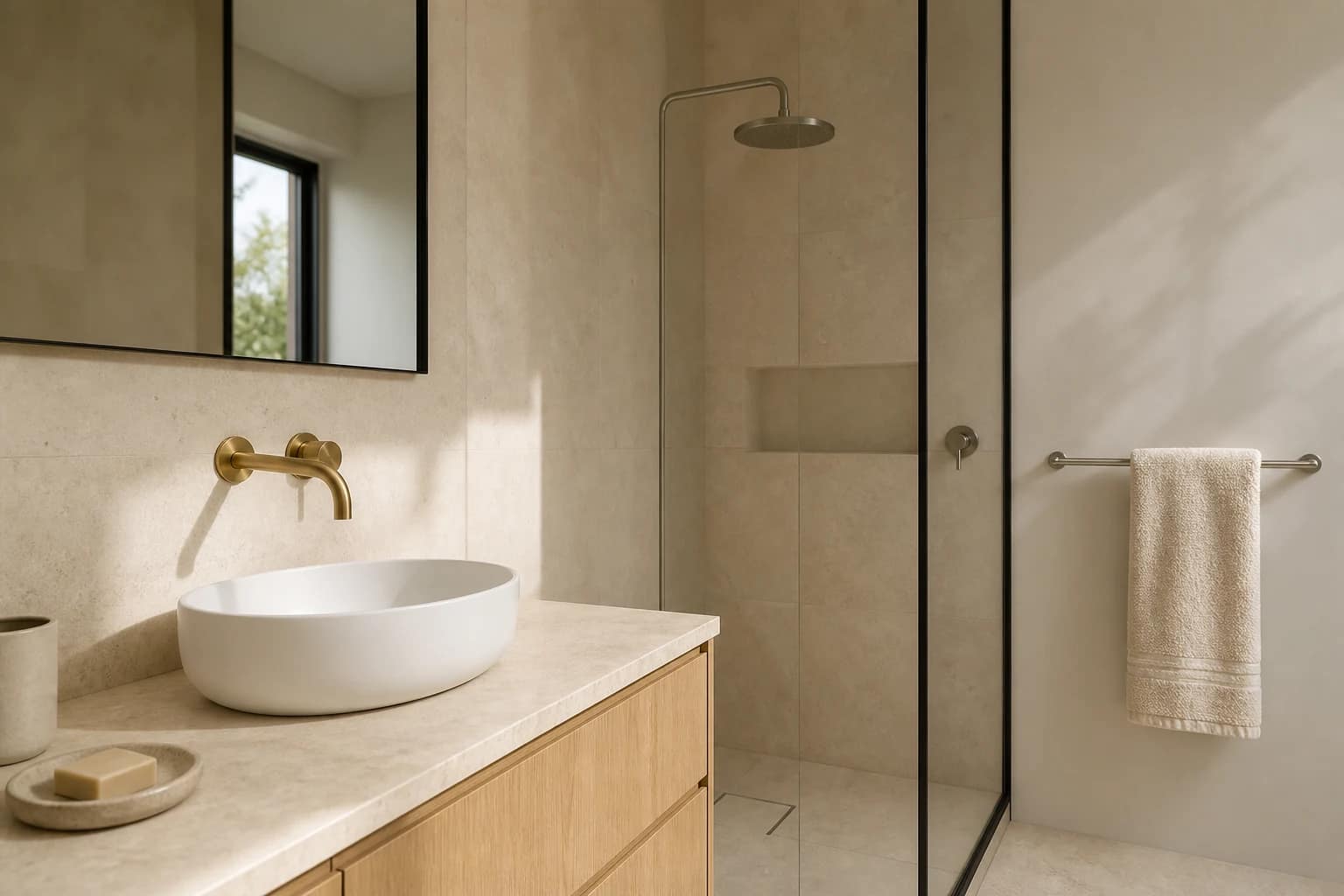
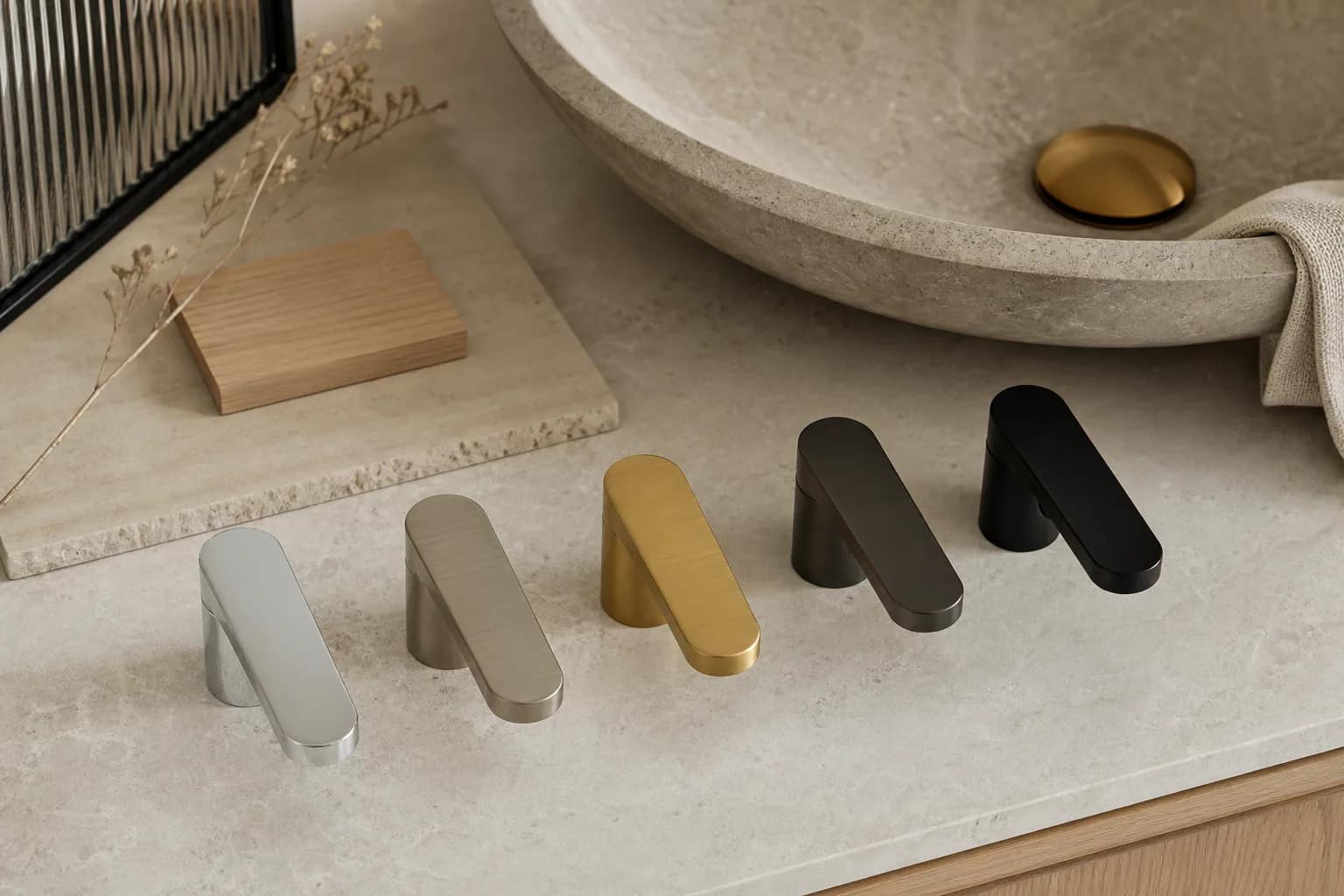
A bathroom does not need every metal element to match. A measured mix can make the room feel more layered and less like a showroom, provided the finishes have a clear hierarchy and are repeated with intent.
Start with how the room must work. Before choosing a vanity or tap finish, list who uses the bathroom, when it becomes busiest and what currently causes frustration. A family bathroom may need durable storage and easy cleaning, while an ensuite can prioritise atmosphere and a more personal routine.
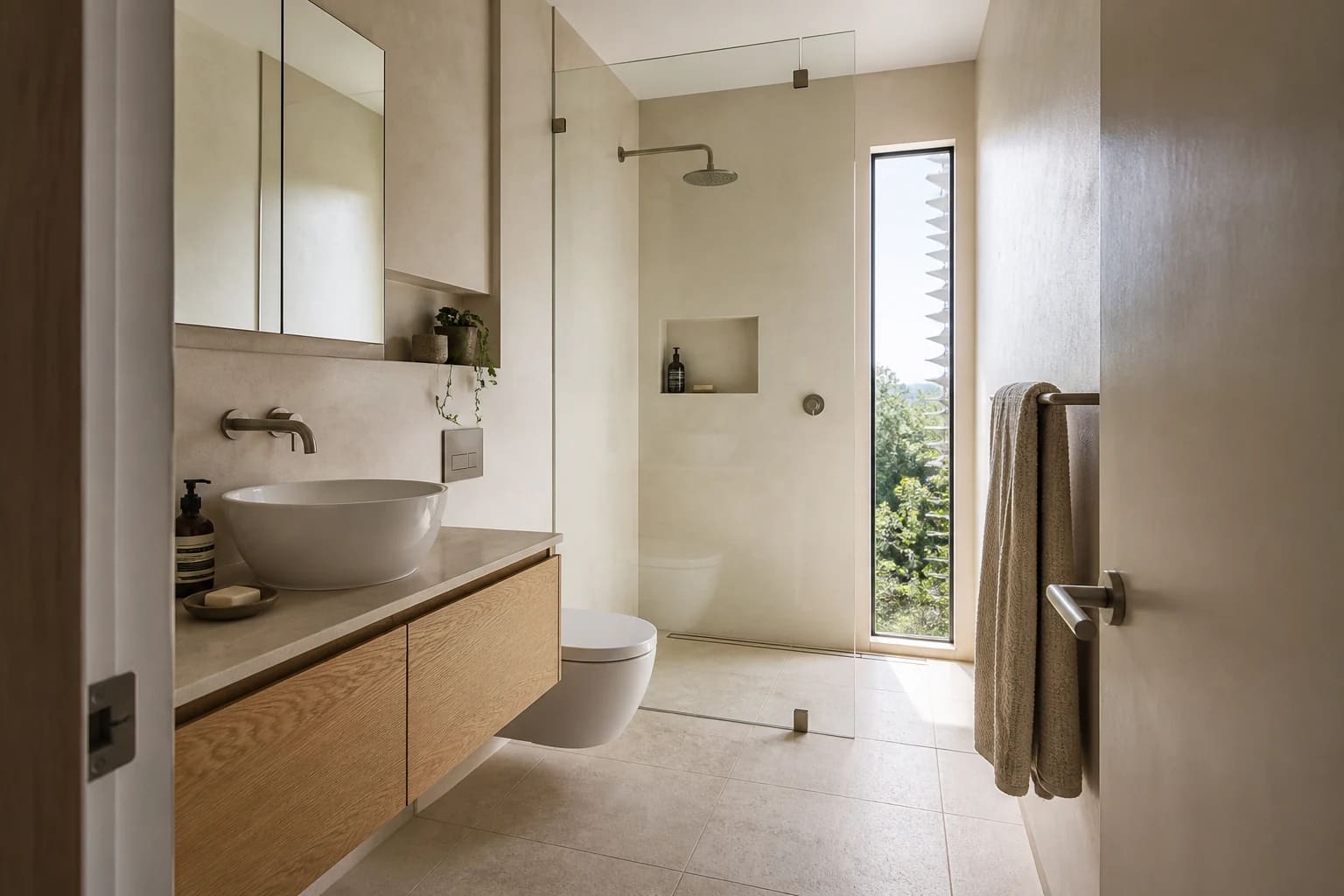
Choose vanity width from the usable wall, not the room size. Measure the clear wall after allowing for architraves, shower glass, toilets, doors and required access. A vanity should look settled in the room while leaving enough space to clean beside it and move comfortably.
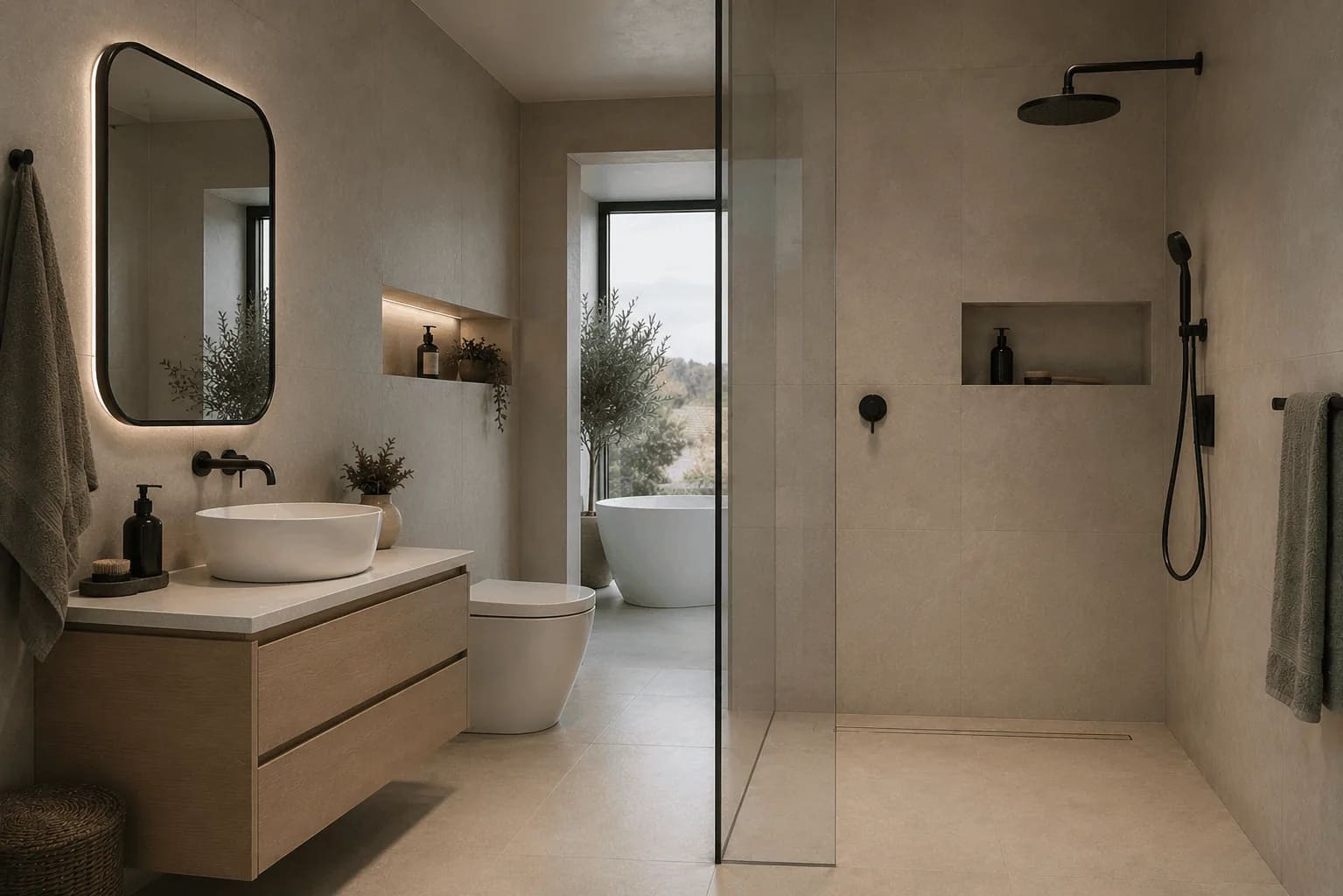
Begin with the room’s overall temperature. Cool white stone and grey tiles often work naturally with chrome, brushed nickel or gunmetal. Warmer travertine, cream surfaces and timber can support brushed gold, coffee-toned finishes or softer brushed metals.
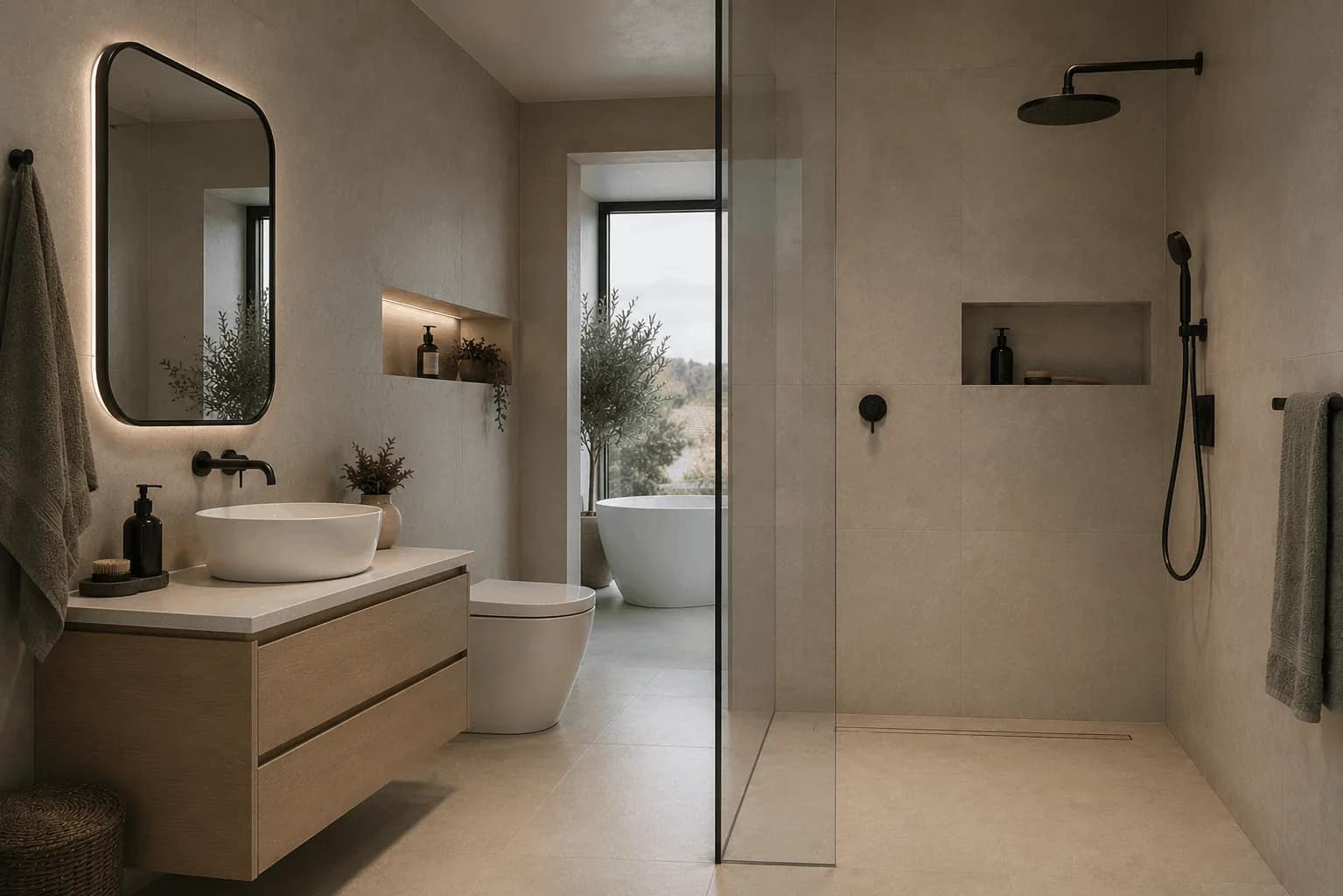
Good bathroom lighting works in layers. General ceiling light makes the room safe to move through, focused light supports grooming at the mirror, and softer ambient light gives the space warmth when full brightness is not needed.