Wall-Mounted Tapware: What to Confirm Before the Wall Closes
Wall-mounted tapware creates a clean, architectural basin or bath zone, but the visible spout and control are only the final layer.
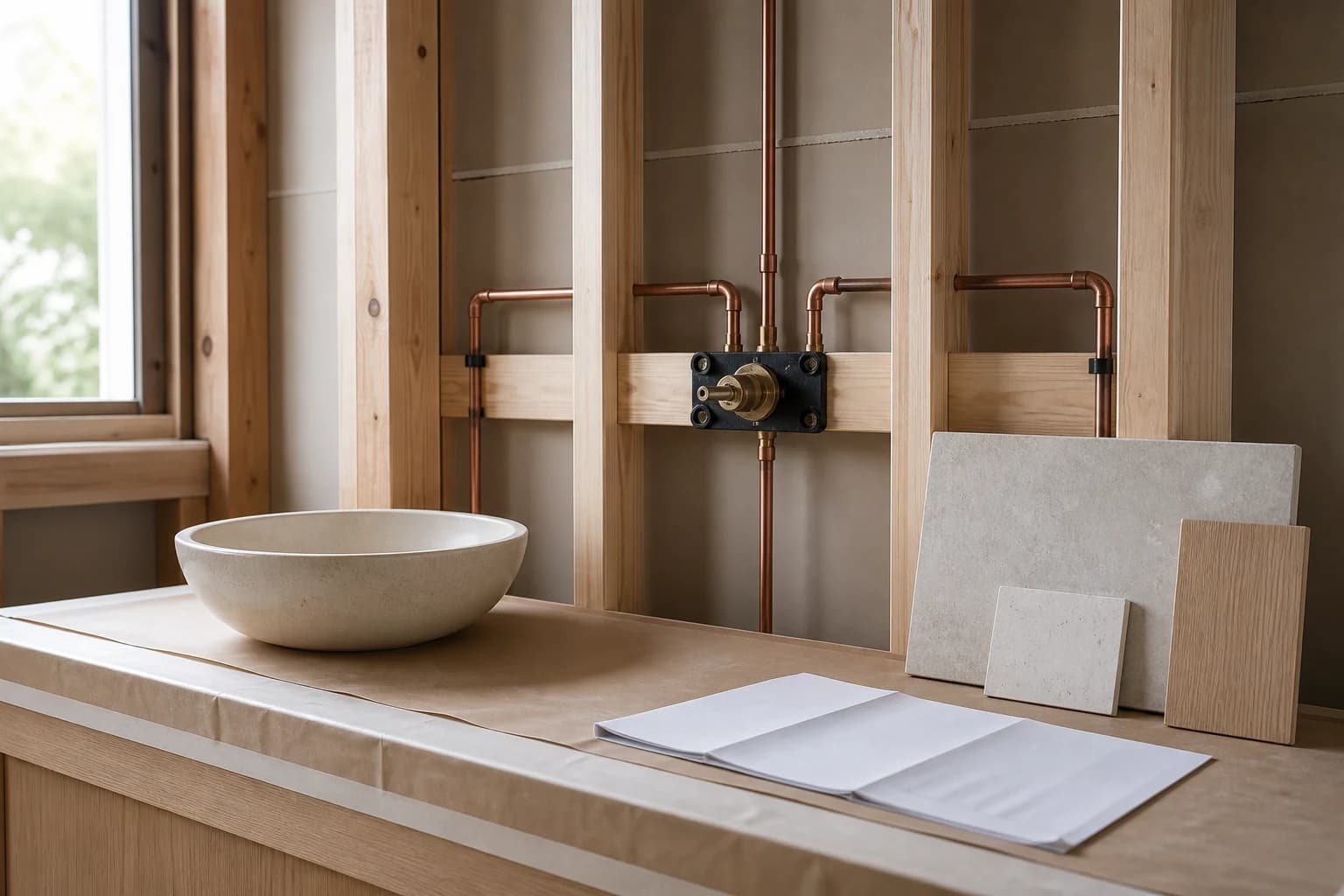
The important decisions happen earlier, while the wall framing and plumbing are still accessible.
Confirm exactly what the product includes.
Some listings are complete sets with the concealed rough-in body and external trim; others are trim-kit-only products designed to pair with a specific in-wall component. Match the product codes and installation documents before anything is installed.
Set the basin and tapware together.
The finished basin height, bowl shape, wall offset and spout reach determine where the water lands. A spout that is too short can crowd the back of the bowl, while one set too high or too far forward may increase splashing. Use the actual product dimensions rather than a generic centreline.
Allow for the complete wall build-up.
Sheeting, waterproofing, adhesive and tile or stone all contribute to the final wall face. The concealed body must sit within the manufacturer’s permitted installation depth so the trim can be fitted securely after the finishes are complete.
Provide suitable support inside the wall.
Mixers and outlets need stable fixing, and heavy wall finishes may require additional planning. The plumber, builder and tiler should agree on the product position and finished surface before the wall is closed.
Plan future servicing.
Concealed components should be installed according to the product instructions, with serviceable parts accessible through the intended trim where designed. Avoid burying undocumented connections or substituting incompatible components simply because they appear similar.
Record the installation before sheeting.
Photograph the rough-in, keep the installation guide and note the product code with the project documents. These records can save considerable time if the room is altered or serviced later.
Complete a final coordination check before waterproofing.
Confirm the basin, vanity, mirror, splashback, outlet positions and handle clearances as one elevation. Wall-mounted tapware is least forgiving when separate trades work from different assumptions, so one signed-off set of measurements matters.